Skilled Crafts Companies
Are you a skilled crafts company interested in recruiting skilled workers from abroad?
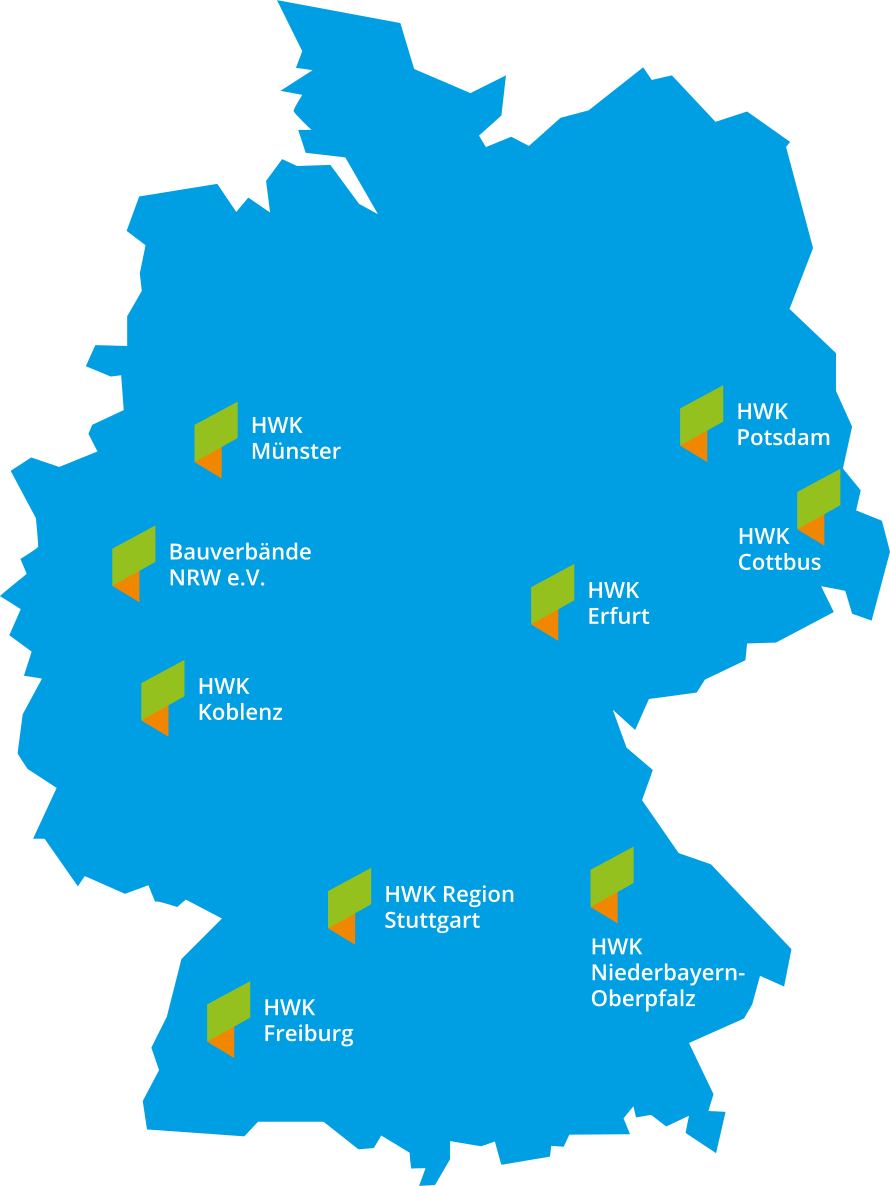
The project “Future International Talents for German Climate Businesses”, funded by the German Federal Ministry for Economic Affairs and Energy (BMWE), offers you the opportunity to recruit skilled workers from Colombia and Uzbekistan for your company. Across nine pilot regions in Germany the project is implemented by the German Confederation of Skilled Crafts (ZDH), the German Federal Employment Agency (BA) and sequa gGmbH, and has a duration from spring 2024 until the end of 2027.
Project services for skilled crafts companies
Personal Advice and Support
A dedicated contact person at your local skilled crafts organization will be available to support you. If your company is located outside the pilot regions, you can contact the ZDH, which will support you with any questions regarding the recruitment process.
Conditions of participation
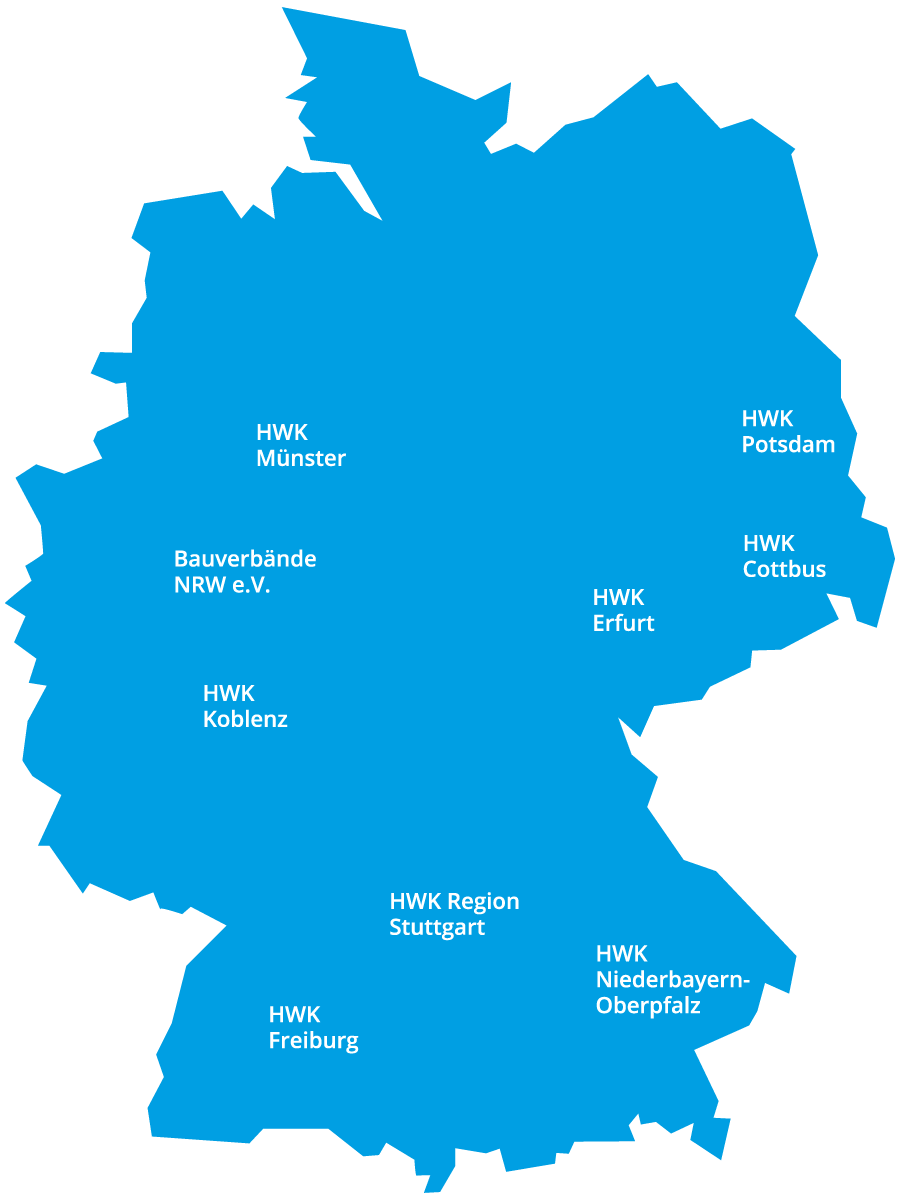
Originally, participation in the project was only possible if your company was located in one of these chamber regions or in the region covered by the trade association. However, as of February 2026, this rule has been amended so that the project is now open to all interested companies in Germany. Additionally, your company must be registered in the trade registry.
Shared Project Costs
Profile of the skilled workers from Colombia and Uzbekistan
The skilled workers recruited by the project have completed at least a two-year vocational training course recognized in their home country. In addition, the obtained at least two years of relevant professional experience in one of the skilled crafts professions focused by the project.
All skilled workers participate in a German language course in their home country up to the B1 level (intermediate language ability, i.e., they can communicate simply and coherently on familiar topics and interests).
The project focuses on skilled crafts professions that contribute to the energy transition and climate protection in Germany, such as:
- Electricians
- Bricklayers
- Concrete and reinforced concrete workers
- Road construction workers
- Metal workers
- Plant mechanics for sanitary, heating and air conditioning technology
- Automotive technicians
Together with our partner countries, we have determined which occupations will be the focus of each recruitment cycle in order to specifically attract skilled professionals and qualified workers with the appropriate profiles.
The Revised Skilled Immigration Act: Immigration Pathways
The project is testing two legal pathways for immigration. The pathway for direct entry as a qualified worker with professional experience is an entirely new provision made possible by the amended Skilled Workers Immigration Act (FEG).
Recruitment Process
Skilled labour force in Colombia and Uzbekistan
Colombia and Uzbekistan offer a significant potential of skilled workers for the skilled crafts sector. In addition, Germany is viewed as an attractive destination for labor migration. Moreover, the two countries hold close and strong political ties with Germany. The collaboration with Colombia in recruiting skilled workers, for instance, is based on a longstanding agreement between the German Federal Employment Agency and the Colombian labor administration.
In September 2024, a migration agreement was signed between Germany and Uzbekistan to ease the entry of skilled Uzbek workers into Germany. The Uzbek government is keen to create legal, secure migration paths for its young population, with the German labor market offering attractive opportunities.
For more information on vocational training systems in Colombia and Uzbekistan, visit the information portal for foreign qualifications (BQ-Portal):
Project Support Structures
The participating skilled crafts organizations play a key role in the project implementation. Skilled immigration advisors are available as your first point of contact, providing consultations and continuous support during all stages of the recruitment process: from the preparation of the skilled worker in their home country up to constant support after their arrival in Germany.
If you are interested to learn more, please contact the skilled crafts organization in your region. Companies outside the pilot regions that are interested can contact the ZDH directly.
The project is implemented by the German Confederation of Skilled Crafts (ZDH), the Federal Employment Agency and sequa gGmbH in collaboration with nine skilled crafts organizations and the labor administrations of Colombia and Uzbekistan.
FAQ
Welche Vorteile habe ich als Arbeitgeber, wenn ich mich an dem Projekt beteilige?
Über das Projekt erhalten Sie als Betrieb Kontakt zu qualifizierten und vorausgewählten Fachkräften aus Kolumbien und Usbekistan. Während des gesamten Prozesses werden sowohl Sie als Betrieb als auch die Fachkräfte individuell begleitet, beraten und unterstützt. Die Fachkräfte absolvieren in ihrem Heimatland einen Sprachkurs bis zum B1-Niveau und werden interkulturell auf das Leben und Arbeiten in Deutschland vorbereitet. Unterstützung erfolgt zudem beim Visumprozess sowie bei der Einreise nach Deutschland. Je nach Zuwanderungsweg wird ggf. die Berufsanerkennung initiiert und begleitet sowie ein Weiterbildungsplan für die Anpassungsqualifizierungen in Deutschland zur Verfügung gestellt. Ihre persönliche Ansprechperson bei der zuständigen Handwerksorganisation wird Sie und die Fachkraft auch nach Ankunft in Deutschland weiter begleiten und Sie bei der betrieblichen und sozialen Integration der Fachkraft unterstützen.
Welche beruflichen Qualifikationen bringen die Fachkräfte aus Usbekistan und Kolumbien mit?
Die Bewerber und Bewerberinnen müssen für die Projektteilnahme einen mindestens zweijährigen, im Herkunftsland staatlich anerkannten Berufsabschluss vorweisen. Darüber hinaus ist der Nachweis über mehrjährige einschlägige Berufserfahrung in den deutschen, gesuchten Handwerksberufen erforderlich. Kommt ein Kandidat mit einem Visum zum Zweck der Anerkennung (Weg 1 im Projekt) nach Deutschland, muss der ausländische Berufsabschluss einen inhaltlichen Bezug zum deutschen Referenzberuf aufweisen.
Kommt ein Kandidat mit einem Visum über die sogenannte Erfahrungssäule (Weg 2 im Projekt), ist ein beliebiger, mindestens zweijähriger, im Herkunftsland staatlich anerkannter Berufsabschluss ausreichend. Der Fokus liegt hier auf der mehrjährigen, einschlägigen Berufserfahrung in den letzten Jahren. Für Kandidaten, die über den Weg 2 rekrutiert werden, können Arbeitsproben im Herkunftsland durch das Projekt durchgeführt werden. Auf diese Weise kann die fachliche Eignung der Bewerber geprüft werden. Das Ergebnis der Arbeitsprobe fließt in die Entscheidung über die Projektaufnahme ein. Nur Personen, deren Arbeitsprobe positiv bewertet wird, können am Projekt teilnehmen.
Über welche Sprachkenntnisse verfügen die Fachkräfte?
Die Fachkräfte reisen mit Sprachkenntnissen auf dem Niveau B1 nach Deutschland ein.
Weitere häufig gestellte Fragen finden Sie hier im Dokument:
Contact and Support
1
2
3
4
5
6
7
8
9
1
Bauverbände NRW e. V.
Jakob Kleine-Kalmer
+49231 – 941180
Get in touch
2
Handwerkskammer Cottbus
Lukasz Kocur
+49355 7835-177
Get in touch
3
Handwerkskammer Erfurt
Olga Kotov
+49361 6707 5455
Get in touch
4
Handwerkskammer Freiburg
Ann Kareen Mertlik
+49761 21800-562
Get in touch
5
Handwerkskammer Koblenz
Ann-Kathrin Maaß
+49261 398-125
Get in touch
6
Handwerkskammer Münster
Christoph Kattentidt
+49251 705-1429
Get in touch
7
Handwerkskammer Niederbayern-Oberpfalz
Jakob Schreiner
+49851 5301-170
Get in touch
8
Handwerkskammer Potsdam
Astrid Kühnicke
+49331 3703-125
Get in touch
9
Handwerkskammer Region Stuttgart
Nadine Boss
+49711 1657-287
Get in touch